


The Sundarban, located in the eastern part of India in West Bengal, is one of the most unique and beautiful natural destinations in the world. It is famous for its dense mangrove forests, rich wildlife, winding rivers, and the legendary Royal Bengal Tiger. The region forms part of the famous Sundarbans National Park, which is recognized globally for its biodiversity.
Every year thousands of tourists visit Sundarban to experience wildlife safaris, bird watching, river cruises, and village culture. At Param Eco Trips, we believe travel is not just about visiting places — it’s about experiencing nature in its purest form. From the serene backwaters of the Sundarban to breathtaking river confluences and lush mangrove forests, we create eco-friendly journeys that connect you with the beauty of the wild.
Our mission is to offer safe, sustainable, and unforgettable travel experiences while preserving the natural charm of every destination we explore. Whether it’s a peaceful boat safari, bird watching, village walks, or spotting the majestic Royal Bengal Tiger, every trip with us is designed to bring you closer to nature. If you are planning a trip, here is a complete list of the best visiting places in Sundarban that you should not miss
12 visiting places in Sundarban
1. Neti Dhopani watch tower
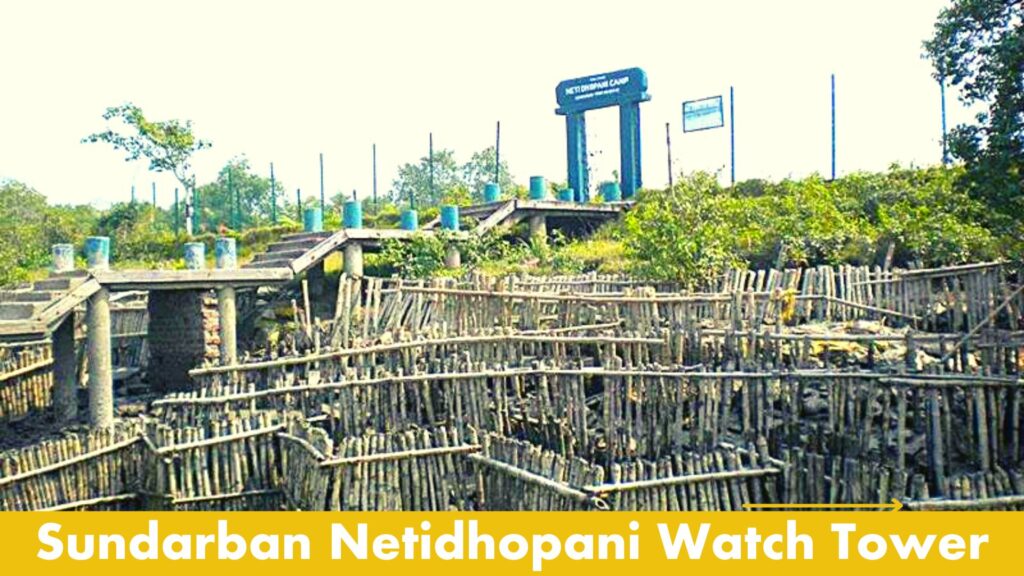
Netidhopani Watch Tower is one of the most unique and culturally significant places inside Sundarbans National Park. Unlike other watch towers mainly known for wildlife sightings, Netidhopani is famous for its ancient ruins, history, and local legends.
- Historical Significance: Near the watch tower, visitors can see the remains of a 400-year-old temple, believed to have been built during the late 16th or early 17th century. Although most of the structure is now covered by forest and time, the old bricks and terracotta fragments suggest that a small settlement once existed in this area.
- Legend of Behula and Lakhindar: Netidhopani is also connected with the famous Bengali legend of Behula and Lakhindar. According to the story, Behula saw a mysterious washerwoman named Netidhopani performing a miraculous act that symbolized life and death. This myth gives the place a spiritual and cultural importance in Bengali folklore.
- Historical Connections: Historians believe the region may also have links with Pratapaditya, who reportedly built defensive embankments to protect the coastal areas from pirates during the medieval period.
- Wildlife Around the Watch Tower: Apart from its historical importance, the area around the tower is rich in wildlife. The tower overlooks a freshwater pond where animals often come to drink. Visitors may see spotted deer, wild boars, birds, and sometimes the majestic Royal Bengal Tiger.
- Visitor Access: Because Netidhopani is located deep inside the forest core zone, entry is strictly regulated. Permits for visiting the site are issued from Sajnekhali Watch Tower, and only a limited number of boats are allowed each day.
2. Sundarban Natural Park
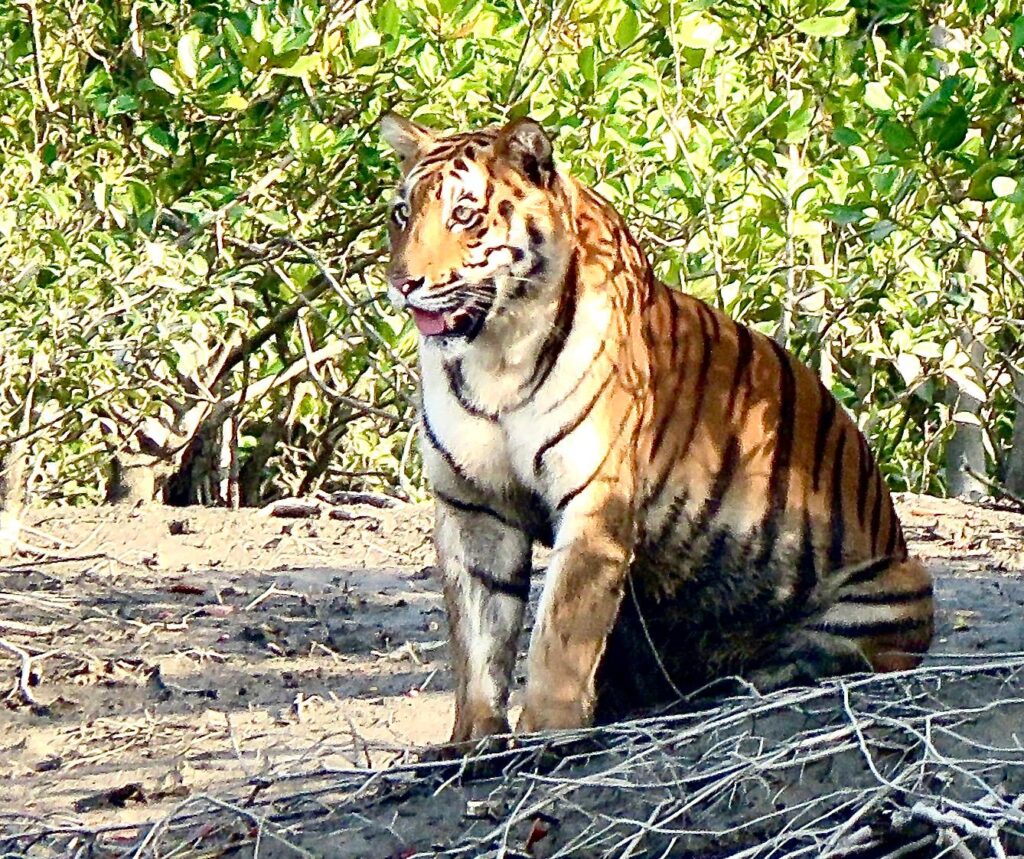
Sundarbans National Park, Located in the southern part of West Bengal, this national park is known for its vast mangrove forests, unique ecosystem, and rich wildlife. It is also home to the majestic Royal Bengal Tiger, making it one of the most important tiger reserves in the world.
Sundarban is the largest mangrove forest in the world, spread across India and Bangladesh. The forest is made up of many islands, rivers, and creeks, creating a unique natural habitat for wildlife.
Sundarban National Park was declared a wildlife sanctuary in 1977 and later became a national park in 1984. In 1987, UNESCO recognized it as a World Heritage Site because of its exceptional biodiversity and ecological importance.
Apart from the Royal Bengal Tiger, the park is home to many animals such as spotted deer, wild boars, saltwater crocodiles, and fishing cats. The rivers also support different species of fish and dolphins.
3. Dobaki watch tower
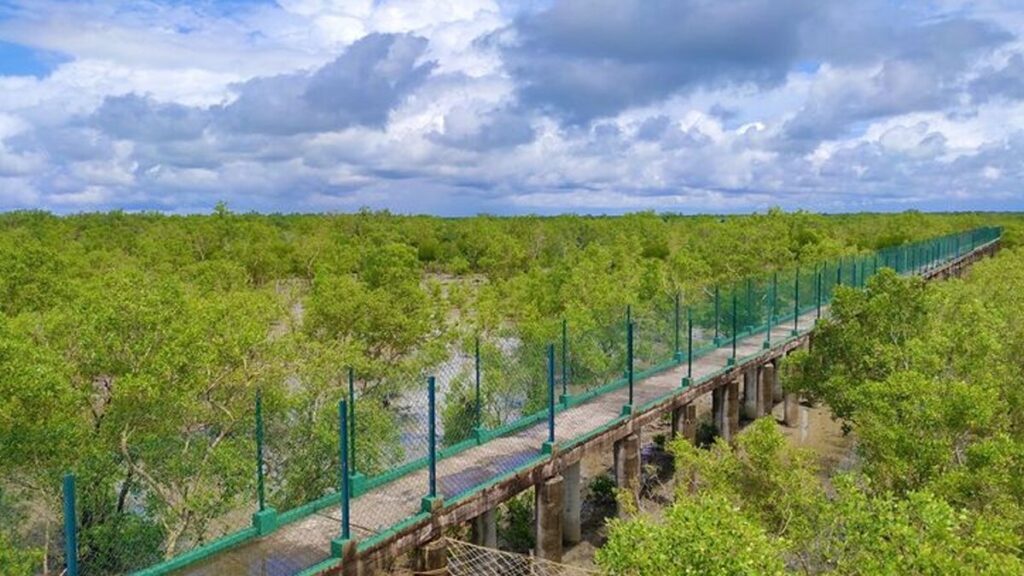
The Dobaki Watch Tower is one of the most prominent and strategically located
observation points within the Sundarban Tiger Reserve. It is famous not just for its wildlife
sightings, but for its unique architectural feature that allows humans to walk through the
tiger’s territory safely.
The Canopy Walk: A Unique Perspective
The defining feature of Dobaki is the half-kilometer-long (approx. 496 meters) Canopy Walk.
This is a raised, fenced walkway standing about 20 feet above the ground.
Safety & Proximity: The walkway is completely enclosed with heavy-duty net fencing and
grills. This allows tourists to walk through the dense mangrove canopy and over the
mudflats where tigers, deer, and wild boar roam, without any physical risk.
The View: From the tower and the walkway, you get a panoramic view of the Dobaki Khal
(creek) and the dense Bani and Gewa forests. It provides a “bird’s-eye view” of the forest
floor, which is otherwise inaccessible due to the swampy terrain and predatory threats.
History and Purpose
The history of the Dobaki Watch Tower is tied to the evolution of Eco-Tourism in the
Sundarbans during the late 20th and early 21st centuries.
Shift in Conservation Strategy: Originally, the Sundarbans were managed strictly for timber
and protection. However, as the “Project Tiger” initiative (launched in 1973) grew, the
Forest Department realized that public engagement was necessary for conservation.
Creation of “Eco-Zones”: Dobaki was developed as a controlled eco-tourism zone. Unlike
the core forest areas where entry is strictly prohibited, Dobaki was designed to educate the
public about the mangrove ecosystem.
The Deer Rehabilitation Center: Historically, Dobaki has also served as a site for a Deer
Acclimatization Center. Spotted deer (Chital) are often kept in a large, fenced natural
enclosure here before being released into the wild to maintain the tiger’s prey base.
Mitigating Human-Wildlife Conflict: The watch tower was built to discourage
“unauthorized” foot entry into the forest. By providing a safe, elevated platform, the
authorities successfully reduced the number of people wandering into the mangroves,
thereby saving lives and protecting the tiger habitat.
Wildlife Spotting at Dobaki
Dobaki is considered a “high-probability” zone for spotting the Royal Bengal Tiger.
Tigers: They often cross the creeks near the tower or rest in the shade of the mangroves
during the afternoon.
Chital (Spotted Deer): A permanent fixture near the tower due to the salt licks and sweet
water ponds maintained by the forest department.
Lizards and Crocodiles: Large Water Monitor Lizards are frequently seen basking on the
mudflats below the canopy walk.
The Brahminy Kite: These majestic birds of prey are often seen circling the skies above the
Dobaki Khal.
Logistics and Visiting
Access: It is reachable only by boat, usually as part of a circuit that includes Sajnekhali and
Sudhanyakhali.
The Sweet Water Pond: Near the tower, there is a man-made sweet water pond. In a
landscape dominated by salt water, this pond acts as a magnet for animals, making the
watch tower an ideal spot for photography.
4. Sundarban Tiger Reserve
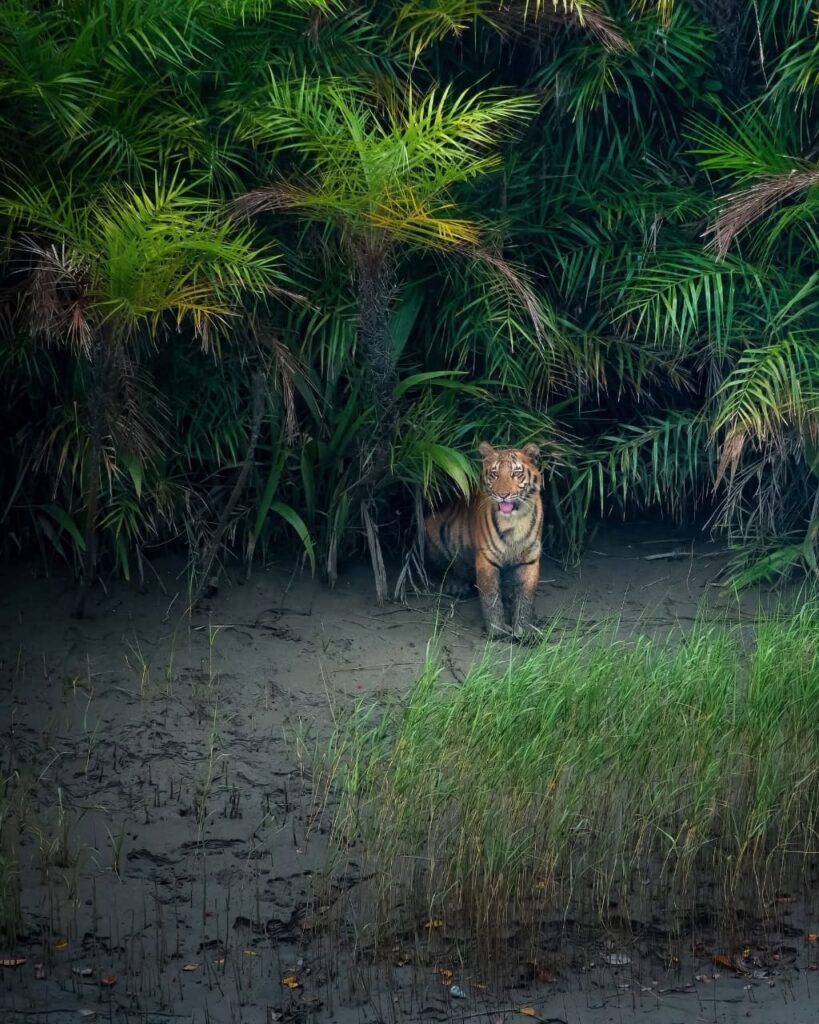
The Sundarban Tiger Reserve (STR) is one of the world’s most significant conservation
landscapes. While the National Park represents the “core” protection area, the Tiger
Reserve is a much larger administrative unit designed to ensure the survival of the Royal
Bengal Tiger in a mangrove habitat.
As of 2025, the Sundarban Tiger Reserve has expanded to become India’s second-largest
tiger reserve, covering approximately 3,629 sq. Km.
Detailed History and Milestones
The transition from a “wasteland” to a globally protected reserve happened over several
centuries of shifting perspectives.
- Pre-Colonial (1658): The first recorded administrative interest was by Shah Shuja (Mughal
Prince), who treated the forest as a source of revenue. - The British Era (1875–1943): The British initially saw the mangroves as an “unexamined
waste” but eventually realized their timber value. Large portions were declared Reserved
Forests in 1875 under the Forest Act. - The Launch of Project Tiger (1973): On December 23, 1973, the Sundarban Tiger Reserve
was officially created as one of the original nine tiger reserves in India. This was a turning
point, moving management away from timber extraction toward wildlife protection. - The National Park Declaration (1984): The most critical core area (1,330 sq. Km) was
upgraded to National Park status on May 4, 1984. - Global Recognition:
- 1987: Named a UNESCO World Heritage Site.
- 1989: Designated as a Biosphere Reserve.
- 2001: Included in the UNESCO World Network of Biosphere Reserves.
- 2019: Recognized as a Ramsar Site (Wetland of International Importance).
Geography and Administration
The reserve is located in the South 24 Parganas and North 24 Parganas districts of West
Bengal, sharing a border with the Bangladesh Sundarban.
Why this Reserve is Unique
The Sundarban Tiger Reserve is unlike any other “Project Tiger” site for several reasons: - Amphibious Predators: It is the only place on Earth where tigers live in a mangrove
ecosystem. They have evolved to swim across wide, salty rivers and hunt for prey like
spotted deer, wild boar, and even fish and crabs. - Lack of Fresh Water: There are no permanent freshwater sources in the core area. Tigers
drink from saline-tinged ponds or rely on the moisture from their prey. - Human-Wildlife Conflict: Because of the dense population on the forest fringes, humantiger conflict is a historical reality. Villagers entering the forest for honey (mouleys) or
fishing often cross paths with tigers.
Modern Challenges
Today, the history of the reserve is entering a difficult chapter due to Climate Change: - Rising Sea Levels: The Sundarbans are losing land at a rate higher than the global
average. This forces tigers and humans into closer proximity. - Salinity: Increasing salt levels in the water are changing the forest’s vegetation, which
affects the prey base for tigers. - Cyclones: Frequent storms like Amphan and Bulbul have repeatedly damaged the
forest’s “bioshield,” requiring intensive restoration efforts.
5. Sojnekhali watch tower

The Sajnekhali Watch Tower is widely regarded as the “gateway” to the Sundarbans.
Located within the Sajnekhali Wildlife Sanctuary, it serves as the administrative
headquarters for the Forest Department and is the most visited spot for tourists due to its
comprehensive facilities and historical significance.
History and Administrative Significance
Sajnekhali holds a unique place in the history of the Sundarban Tiger Reserve (STR).
- The Hub of Conservation: When the Sundarbans were being organized into a Tiger
Reserve in 1973, Sajnekhali was chosen as the primary monitoring station. It sits at the
confluence of the Gomti and Malta rivers, making it a strategic point to oversee boat traffic
and forest patrolling. - Establishment of the Sanctuary: In 1976, the area surrounding the watch tower (approx.
362 sq. Km) was officially declared the Sajnekhali Wildlife Sanctuary. - The “Headquarters” Evolution: Over the decades, it evolved from a simple wooden
lookout into a sophisticated complex that houses the Forest Office, where all tourist boat
permits must be validated before entering the deeper forest.
The Watch Tower Experience
The Sajnekhali Watch Tower is designed for high-capacity viewing, able to accommodate
up to 20 people at a time. It offers a 360-degree view of the surrounding mangroves and the
river confluence.
Key Features of the Complex: - The Mangrove Interpretation Centre: This is a small museum that provides a detailed
history of the Sundarbans, the life cycle of mangroves, and preserved specimens of the
local fauna. - The Bono Bibi Temple: A shrine dedicated to the forest goddess, Bono Bibi. Both Hindus
and Muslims worship here for protection before entering the forest—a tradition that dates
back centuries. - Crocodile and Turtle Pond: There is a dedicated pond where Estuarine Crocodiles and
the critically endangered Northern River Terrapins are bred and displayed for educational
purposes. - The Heronry: During the monsoon and post-monsoon months, the area around the tower
becomes a massive nesting ground for various species of herons and egrets.
Wildlife and Sightings
While tigers are occasionally spotted near the tower, Sajnekhali is more famous for its
diverse birdlife and smaller mammals. - Avifauna: It is a birder’s paradise. You can regularly see the White-bellied Sea Eagle,
Kingfishers (seven different species!), and the Lesser Adjutant Stork. - Spotted Deer (Chital): Large herds frequent the “salt licks” placed near the tower.
- Wild Boar: These are common visitors to the sweet water pond located right in front of
the observation deck. - Rhesus Macaques: These monkeys are permanent residents of the Sajnekhali complex
(and are known for being quite mischievous!).
Logistics for Visitors - Permit Requirement: Every visitor entering the Sundarban Tiger Reserve must stop here
to obtain or show their entry permits. - Location: It is situated on the banks of the Pichkhali River. Most tourists stay in hotels in
Pakhiralay or Gadkhali and take a short boat ride to reach Sajnekhali. - Best Time to Visit: Early morning or late afternoon is best for birdwatching and avoiding
the midday heat.
Interesting Fact
Sajnekhali is one of the few places in the world where you can see a “Tiger Tracking Map” in
the forest office, which logs recent sightings reported by forest guards and local fishermen!
6. Jhingamari watch tower

The Jhingamari Watch Tower is one of the most secluded and “off-the-beaten-path”
destinations within the Sundarban Tiger Reserve. Located in the Basirhat Range (the
easternmost part of the Indian Sundarbans, bordering Bangladesh), it offers a raw and
rugged experience compared to the more tourist-heavy spots like Sajnekhali.
History and Context
The history of Jhingamari is deeply tied to the Eastern Sundarbans’ role as a frontier zone.
- Remote Outpost: Historically, the Jhingamari area served as a remote outpost for forest
guards patrolling the international border with Bangladesh. Because it is located far from
the main entry points like Gadkhali, it remained largely inaccessible to tourists for
decades. - Expansion of Eco-Tourism: In the late 1990s and early 2000s, the West Bengal Forest
Department began developing Jhingamari as part of a “decentralized tourism” strategy. The
goal was to reduce the environmental pressure on the central zones
(Sajnekhali/Sudhanyakhali) by opening up the Basirhat Range to nature lovers. - The “Tiger Frontier”: Jhingamari has a history of being a high-activity zone for the Royal
Bengal Tiger. Because it is less disturbed by boat engines and large crowds, the tigers in
this region are known to be particularly shy yet bold in their territorial movements.
Features of the Watch Tower
Jhingamari is designed for those who appreciate silence and the “whispers” of the forest. - The Viewpoint: The tower overlooks a vast expanse of dense mangrove forest and a
strategically placed sweetwater pond. In the saline environment of the Sundarbans, these
ponds are the primary “meeting points” for wildlife. - The Forest Type: The vegetation here is distinct, featuring a high concentration of Hetal
(Phoenix paludosa) trees. Tigers often use the low-hanging, dense fronds of Hetal palm for
camouflaging while they wait for prey. - The Canopy Experience: While smaller than the famous canopy walk at Dobaki,
Jhingamari offers an intimate look at the various layers of the mangrove ecosystem, from
the mud-dwelling crabs to the canopy-dwelling birds.
Wildlife at Jhingamari
The “vibe” at Jhingamari is different from other towers. It is quieter, which increases the
chances of hearing the forest’s natural sounds. - The Basirhat Tigers: The tigers here are part of the population that frequently crosses the
river boundaries into the Bangladesh side of the Sundarbans. - Lesser-Seen Species: Because of its remote location, visitors have reported sightings of
the Fishing Cat (the state animal of West Bengal) and the Jungle Cat. - Birding: It is an excellent spot for seeing the Brown-winged Kingfisher and the Buffy Fish
Owl, both of which prefer the quieter corners of the reserve.
Logistics and Accessibility
Reaching Jhingamari requires a bit more effort, which is exactly why it remains so pristine. - Entry Point: Most travelers access Jhingamari via Bagna, which is the entry gate for the
Basirhat Range. - Permits: Just like other towers, a special permit from the Forest Department is required,
usually obtained at the Bagna Forest Office. - Isolation: There are fewer resorts and hotels in this area compared to the Pakhiralay side,
so visitors often visit Jhingamari as part of a long-haul boat cruise.
Pro Tip
If you are a photographer looking for “uncluttered” shots of the mangroves without other
tourist boats in your frame, Jhingamari is your best bet. The light hitting the Hetal palms
during the “golden hour” (late afternoon) is spectacular.
7. Sudhanyakhali watch tower
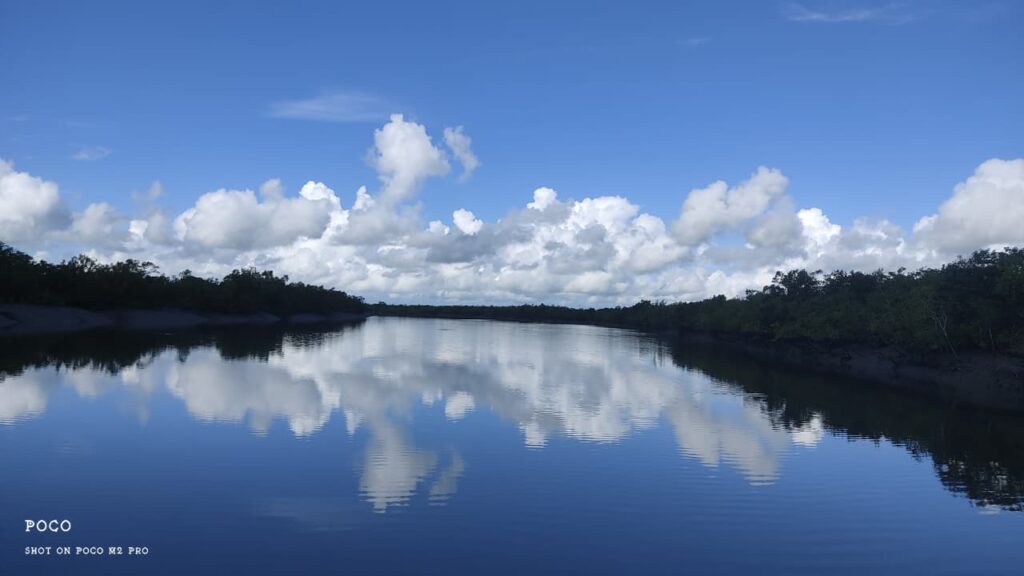
The Sudhanyakhali Watch Tower is arguably the most famous spot for tiger sightings within
the Sundarban Tiger Reserve. While Sajnekhali is the administrative hub, Sudhanyakhali is
the “theatre” where the drama of the wild unfolds most frequently.
Located deep within the buffer zone, it is designed specifically for wildlife observation and
ecological education.
History and Strategic Location
The history of Sudhanyakhali is intrinsically linked to the Project Tiger initiatives of the
1970s and 80s.
- Creation for Conservation (1970s-80s): As the Sundarban Tiger Reserve (STR) was
established in 1973, forest officials identified Sudhanyakhali as a “high-traffic” corridor for
tigers moving between the core and buffer islands. - The Sweetwater Experiment: Historically, one of the biggest challenges for wildlife in the
Sundarbans is the lack of potable water. The Forest Department dug a large sweetwater
pond right in front of the Sudhanyakhali observation deck. This was a strategic move to
“anchor” the wildlife to a specific spot, making it easier for guards to monitor the health of
the tiger population and for tourists to view them without venturing deep into the
dangerous forest. - Renovations: Over the decades, the tower has been upgraded from a basic wooden
platform to a robust, high-capacity concrete structure to accommodate the growing
number of eco-tourists.
The Watch Tower Experience
Sudhanyakhali can hold about 25 people at a time and offers one of the clearest sightlines
in the entire delta.
Key Features: - The Iconic Sweetwater Pond: This is the “star attraction.” Because the surrounding river
water is highly saline, animals like Tigers, Spotted Deer, and Wild Boars are drawn to this
pond, especially during the scorching summer months (March–June). - Mangrove Diversity: The area around the tower is a botanical goldmine. You can see
various species like Sunderi, Gewa, and Passur trees. The Forest Department has labeled
many of these trees to help visitors identify them. - The Fenced Walkway: Like most towers in the reserve, a protected, grilled walkway leads
from the jetty to the tower, ensuring that visitors can traverse the “tiger-land” safely.
Wildlife: The “Tiger Capital”
If someone says they saw a tiger in the Sundarbans, there is a very high statistical chance
they saw it at Sudhanyakhali. - The Royal Bengal Tiger: Sightings here are frequent because the tower overlooks an open
glade, providing a rare break in the otherwise impenetrable mangrove thicket. - Axis Deer (Chital): Large herds are almost always present near the pond. They serve as a
natural “alarm system”; if the deer start barking, it usually means a tiger is nearby. - Monitor Lizards: Huge Water Monitor Lizards are often seen sunbathing on the banks of
the pond. - Wild Boar: They frequent the muddy edges of the water source.
Logistics and Navigation - Access: It is located about 15–20 minutes by boat from the Sajnekhali Wildlife Sanctuary.
- The “Silent Approach”: Guides often instruct boatmen to kill the engines as they
approach the Sudhanyakhali jetty to avoid startling any animals that might be drinking at
the pond. - Best Time to Visit: Mid-morning (after the mist clears) or late afternoon (just before the
park closes at 4:30 PM or 5:00 PM).
A Note on the “Sudhanyakhali Luck”
Local guides often speak of the “Luck of Sudhanyakhali.” Because the forest is so dense,
seeing a tiger is often a matter of being at this specific tower at the exact moment a tiger
decides to come for a drink. It remains the top choice for professional wildlife
photographers visiting the region.
8. Bonnie Camp watch tower
The Bonani Camp Watch Tower (also commonly referred to as the Buridabri Watch Tower)
is one of the most remote and atmospheric observation points in the Sundarban Tiger
Reserve. Located in the Basirhat Range, it sits right on the international border, where the
Raimangal River separates India from Bangladesh.
History and Border Significance
The history of the Bonani/Buridabri area is deeply intertwined with the geopolitical and
ecological boundary of the Sundarbans.
- The Frontier Outpost: Historically, this camp served as a high-security frontier for the
Indian Forest Department and the Border Security Force (BSF). Because it overlooks the
Raimangal River, which acts as the border with Bangladesh, it has always been a critical
point for monitoring both tiger movement and cross-border activity. - Development for Eco-Tourism: Unlike the central towers like Sajnekhali, Bonani was
developed much later for public access. The goal was to provide a “wilderness experience”
far away from the commercialized tourist hubs. - The “Buridabri” Connection: The watch tower is famous for its Buridabri Mud Walk. The
history of this location is tied to the concept of “educational tourism,” where visitors are
encouraged to see the mangrove roots (pneumatophores) and mudflats up close from a
safe, wooden layout.
The Watch Tower and the “Mud Walk”
What makes the Bonani Camp unique isn’t just the tower itself, but the journey to get there.
- The Wooden Plank Walkway
To reach the tower, visitors must walk along a long, winding wooden bridge/plank path that
cuts through the heart of a dense mangrove forest. This allows you to look directly down
into the mudflats, which are teeming with life that you can’t see from a boat. - The International View
From the top of the Bonani Watch Tower, you get a stunning panoramic view:
- The Raimangal River: A massive, wide river that serves as the boundary.
- Bangladesh Sundarbans: On a clear day, you can look across the water and see the
dense forests of the Bangladesh side, which are part of the same continuous ecosystem.
Wildlife at Bonani
Because this area is so far from the main tourist entry points, it is extremely quiet. This
silence attracts wildlife that avoids the noisier central zones. - Tigers: The tigers in the Basirhat/Buridabri range are known to be strong swimmers, often
crossing the Raimangal River between India and Bangladesh. - The “Small Five”: This is the best place to observe the smaller wonders of the
Sundarbans: - Mudskippers: Fish that can “walk” on land using their fins.
- Fiddler Crabs: Famous for their one oversized colorful claw.
- Hermit Crabs: Moving along the mudflats in scavenged shells.
- Reptiles: Large Water Monitor Lizards are very common here, often seen flicking their
tongues near the wooden walkway. - Birds: You can frequently spot the White-bellied Sea Eagle soaring over the river or the
Brahminy Kite perched on the high branches of the Keora trees.
Logistics and Visiting
Visiting Bonani Camp is an adventure that requires careful planning. - The Bagna Entry: You must first reach the Bagna Forest Office to get your permits. From
Bagna, it is a long, scenic boat ride through narrow creeks to reach the Buridabri/Bonani
area. - Isolation: There are almost no shops or stalls here. It is a “Carry-In, Carry-Out” zone,
meaning you must bring your own water and food and take your trash back with you. - The Experience: It is highly recommended for those who want to experience the solitude
of the mangroves rather than just “ticking off” a tiger sighting.
Why “Bonani”?
In Bengali, “Bonani” refers to a beautiful, lush forest. The name was chosen to reflect the
untouched, deep-green canopy that characterizes this specific eastern tip of the Indian
Sundarbans.
9. Bhagabatpur crocodile park
The Bhagabatpur Crocodile Project, commonly known as the Crocodile Park, is a premier
conservation center in the Sundarbans. Located on the banks of the Saptamukhi Estuary
adjacent to Lothian Island, it is the only crocodile breeding and rearing center in West
Bengal.
History and Establishment
The history of Bhagabatpur is rooted in the global conservation movement of the 1970s,
when crocodilian species were on the brink of extinction due to poaching and habitat loss.
Foundation (1976): The project was officially launched in 1976 as part of the broader
Indian Crocodile Conservation Project (initiated in 1975 with the help of the UNDP and
FAO).
Purpose: The primary objective was to replenish the depleting population of Saltwater
Crocodiles (Crocodylus porosus) in the Sundarbans. The method used is known as “Rear
and Release”—collecting eggs from the wild, hatching them in a controlled environment,
and releasing the juveniles once they are large enough to defend themselves.
Expansion: Since its inception, the center has successfully released hundreds of
crocodiles into the wild. As of 2025, recent surveys indicate that the crocodile population
in the Sundarban Biosphere Reserve has risen to over 240 individuals, a testament to the
decades of work at Bhagabatpur.
Breeding and Conservation Process
The park is more than just a tourist spot; it is a scientific hatchery designed to maximize the
survival rate of hatchlings, which is naturally less than 1\% in the wild.
Egg Collection: Forest guards collect eggs from the muddy banks of the Sundarban
creeks.
Incubation: The eggs are kept in a temperature-controlled Hatchery to ensure a high
hatch rate.
Growth Stages: The center maintains separate pools for different age groups:
Newborns/Hatchlings: Kept in small, shallow tanks.
Juveniles: Moved to larger enclosures as they grow.
Sub-Adults: Once they reach approximately 1.2 to 1.5 meters (around 4–5 years old),
they are tagged and released into the core areas of the Tiger Reserve.
Batagur Baska: Interestingly, the center also serves as a sanctuary for the Northern River
Terrapin (Batagur baska), one of the world’s most endangered freshwater turtles.
Visitor Experience
Bhagabatpur is a major stop for tourists traveling through the western part of the
Sundarbans (Namkhana/Bakkhali side).
Observation: Visitors can walk along the enclosures to see crocodiles of various sizes,
from tiny hatchlings to massive, 15-foot adults.
Interpretation Centre: A small museum provides insights into the life cycle of the
“Salties” and their role as apex predators in the mangrove ecosystem.
The Landscape: The park is surrounded by dense mangrove forests of Sundari and Goran
trees, offering a scenic and educational environment.
Logistics and Visiting
Access: It is most easily reached by boat from Namkhana, Bakkhali, or Sagar Island. It is
often included in boat itineraries that visit the Bonnie Camp or Kalash Island.
Best Time to Visit: October to March is ideal. During the winter, you can often see the
crocodiles basking in the sun on the banks of the pools.
Environmental Impact: The project is a success story of “Ecological Inclusiveness,”
showing that conservation can save even “non-charismatic” (non-fuzzy) animals like
reptiles.
Did You Know?
Saltwater crocodiles are the world’s largest living reptiles. A full-grown male at
Bhagabatpur can grow up to 20 feet long and weigh over 1,000 kg!
10. Jharkhali
Jharkhali is often referred to as the “New Gateway to the Sundarbans.” Located in the
Basanti block of South 24 Parganas, it sits at the confluence of the Matla and Bidyadhari
rivers.
Unlike the traditional entry point at Gadkhali, Jharkhali has been developed by the West
Bengal government as a modern eco-tourism hub that balances wildlife rehabilitation with
visitor accessibility.
History and Development
The history of Jharkhali is a relatively recent success story of land reclamation and
conservation-driven infrastructure.
Reclamation Period: Historically, Jharkhali (Lot No. 126) was a remote island covered in
dense mangroves. It was only in the mid-to-late 20th century that human settlements
stabilized here as embankments were built to protect the land from tidal surges.
The “New Gateway” Vision (2009–2010): The West Bengal government identified Jharkhali
as a strategic location to de-congest the Sajnekhali-Pakhiralay tourist circuit. The proposal
for a “Satellite Facility” of the Alipore Zoo was drafted during this period.
Inauguration of SWAP (2014): On December 8, 2014, the Sundarban Wild Animal Park
(SWAP) was officially inaugurated. This transformed Jharkhali from a sleepy fishing village
into a major destination for tiger conservation and education.
Economic Shift: Over the last decade, the local economy has shifted significantly from
subsistence fishing and honey collecting to eco-tourism, with the establishment of
numerous resorts and the Jharkhali Hotel Owners Welfare Association in 2022.
The Tiger Rescue & Rehabilitation Centre
Jharkhali is most famous for housing India’s first tiger rescue center in a mangrove habitat.
The Mission: The center was built to provide a home for “straying” tigers—those that
accidentally enter human villages—and injured tigers that require medical attention before
being released back into the wild.
The Facility: It covers about 100 acres and is designed to mimic the natural mangrove
environment. It features high-security fencing (15-foot iron bars) that allows the tigers to
roam in a semi-wild state while being monitored by veterinary experts.
Educational Role: For many tourists, this is the only place where they can reliably see a
Royal Bengal Tiger up close. The center aims to build “empathy” among visitors by
explaining the challenges these predators face due to habitat loss and climate change.
Jharkhali Watch Tower and Attractions
The watch tower at Jharkhali offers a different perspective compared to the deep-jungle
towers of the core area.
The View: It provides a panoramic view of the Matla River and the fringe forests. It is an
excellent spot to witness the “Borun” (tide) coming in, which drastically changes the
landscape within minutes.
Mangrove Interpretation Centre: Located near the tower, this center uses maps, models,
and specimens to explain the complex biology of mangroves and the history of the
Dampier-Hodges line (the historical boundary of the Sundarbans).
Butterfly Garden & Deer Park: The complex also features a dedicated garden for endemic
Lepidoptera (butterflies) and a fenced area for spotted deer, which serves as an
“acclimatization” zone.
Why Visit Jharkhali?
Jharkhali has become a favorite for families and first-time visitors for several reasons:
Road Connectivity: It is one of the few places in the Sundarbans that can be reached
directly by car from Kolkata (approx. 100 km) without a long initial boat ride.
Safety: The rescue center allows children and elderly visitors to see wildlife without the
physical strain of long boat safaris.
Gateway to the South: From Jharkhali, you can hire boats to reach deeper, more remote
camps like Bonnie Camp, Kalash Island, and Dobaki.
Pro Tip
If you are visiting Jharkhali, try to stay for the sunset. The view of the sun dipping into the
massive Matla River from the Jharkhali jetty is considered one of the most beautiful sights
in the entire delta.
11. Burir dabri
The Burir Dabri Watch Tower (often spelled Burirdabri) is the easternmost outpost of the
Indian Sundarbans, located in the Basirhat Range. It is frequently described as the “most
adventurous” watch tower in the delta because of its unique “Cage Walk” and its location
right on the international border with Bangladesh.
History and Establishment
The history of Burir Dabri is a testament to the expansion of eco-tourism into the remote
buffer zones of the Sundarban Tiger Reserve.
Inauguration (2003): The Burir Dabri Eco-Tourism Complex was officially inaugurated in
- Before this, the area was primarily a high-security forest beat used by forest guards
and the Border Security Force (BSF) for patrolling the Raimangal River.
Strategic “Buffer” Development: The Forest Department developed this site to draw
tourists away from the overcrowded Sajnekhali-Sudhanyakhali circuit. Its creation was part
of a broader strategy to provide livelihood opportunities to the local communities of the
Basirhat Range (like Bagna and Kumirmari) through tourism.
The International Boundary: Historically, this region has been a critical “corridor” for
tigers swimming between the Indian and Bangladeshi sides of the Sundarbans. The tower
was built to monitor this trans-boundary movement and to provide a safe vantage point for
humans in a high-density tiger zone.
Architectural Highlights: The Cage Walk
What sets Burir Dabri apart from every other tower in the Sundarbans is its Cage Walk (also
known as the Mud Walk).
The Mangrove Trail: To reach the tower, visitors must walk through a long, narrow bridgelike structure that is completely enclosed in heavy iron mesh (a “cage”).
The Mud Experience: This trail is built just a few feet above the swampy forest floor. It
allows you to walk through the dense Goran and Gewa mangroves, seeing the breathing
roots (pneumatophores) and mud-dwelling creatures up close while remaining totally
protected from potential tiger attacks.
Raimangal View Point: The trail culminates in the watch tower, which offers a 360-degree
view of the Raimangal River. On the opposite bank of the river lies the Bangladesh
Sundarbans.
Wildlife and Biodiversity
Due to its isolation, Burir Dabri offers a “rawer” wildlife experience than the more
commercialized towers.
The Border Tigers: The tigers in this range are known for being extremely elusive. While
sightings are rarer than at Sudhanyakhali, the presence of fresh pugmarks (footprints) on
the mudflats under the cage walk is a common and thrilling occurrence.
Ground Fauna: This is the best place to observe the “Small Wonders” of the mangroves:
Fiddler Crabs: Thousands of these crabs with one giant red or yellow claw can be seen
scurrying below the walkway.
Mudskippers: Amphi-bious fish that “walk” on the mud using their pectoral fins.
Avian Life: Because the Raimangal River is so wide, you can often see White-bellied Sea
Eagles and Brahminy Kites hunting for fish over the international waters.
Logistics and Visiting
Because of its remote location, visiting Burir Dabri requires more effort than other towers.
Entry Point: Access is usually through the Bagna Forest Office.
The Long Journey: It is a long, 4–5 hour boat ride from the common tourist hubs like
Pakhiralay. Most tourists visit Burir Dabri as part of a dedicated “Border Route” itinerary.
Tuesday Closure: Like many other forest camps in the Sundarbans, the Burir Dabri
complex is generally closed to tourists every Tuesday.
Why is it called “Burir Dabri”?
The name is derived from local Bengali dialect: “Burir” refers to an old woman, and “Dabri”
refers to a small water body or a low-lying swamp. Local folklore often links these remote
corners of the forest to the protective spirit of Bono Bibi, who is said to protect the elderly
and the poor who venture into these dangerous marshes for honey and wax.
12. Pakhirala
Pakhiralay (meaning “The Abode of Birds”) is the primary hub for tourists visiting the
Sundarban Tiger Reserve. Unlike the isolated forest camps or watch towers, Pakhiralay is a
bustling, vibrant village located on Gosaba Island along the banks of the Datta River. It
serves as the base camp for almost all travelers heading into the central and eastern forest
ranges.
History and Local Heritage
The history of Pakhiralay is a blend of colonial experimentation and local tradition.
The Hamilton Legacy (1903): Pakhiralay is part of the Gosaba estate, which was once
owned by Sir Daniel Hamilton, a Scottish businessman. In the early 20th century, Hamilton
purchased 10,000 acres to create a “Cooperative Model” for rural development. He aimed
to build a society free from money lenders and zamindars, making this area a historic site
for social upliftment.
The “Abode of Birds”: Traditionally, before it became a concrete tourism hub, the village
was a dense forest area where thousands of migratory and local birds would nest. While it
is now more developed, the name “Pakhiralay” reflects its biological history as a bird
sanctuary.
Mythological Roots: Like much of the Sundarbans, the history of this village is steeped in
the folklore of Bono Bibi and Dakshin Rai. Local families here have survived for generations
by entering the forest for honey and wax, always stopping at the small shrines in the village
to pray for protection.
Pakhiralay Today: The Tourism Hub
Pakhiralay is the most developed village in the Sundarbans in terms of infrastructure.
Strategic Location: It sits directly opposite the Sajnekhali Wildlife Sanctuary. Every
morning, hundreds of boats leave the Pakhiralay jetties to cross the river to Sajnekhali to
get their forest entry permits.
Economic Transformation: Over the last 20 years, Pakhiralay has transitioned from a
fishing village to a tourism-driven economy. It houses most of the region’s eco-resorts,
lodges, and local marketplaces.
The Local Market: In the evenings, the Pakhiralay market is a hive of activity. Tourists can
buy local honey (harvested by the mouleys), wooden handicrafts, and traditional Bengali
snacks.
Wildlife and Birding
While you won’t see tigers in the village streets, Pakhiralay remains a significant spot for
birdwatchers.
Heronry: The riverside and the surrounding trees are home to various species of Herons,
Egrets, and Cormorants.
Kingfishers: If you sit by the riverbank at sunrise, you can easily spot Common, Whitethroated, and Pied Kingfishers diving for fish.
Migratory Visitors: During winter (November to February), the village outskirts attract
several migratory species that stop here before heading deeper into the mangroves.
Logistics: How to Reach
Pakhiralay is the standard “end-point” of the road journey from Kolkata.
Step 1: Travel from Kolkata to Gadkhali by road (approx. 3 hours).
Step 2: Take a 15–20 minute motorized boat ride across the Bidyadhari River from
Gadkhali to reach Pakhiralay.
Step 3: Most visitors check into their hotels in Pakhiralay and then use it as a launchpad
for day trips to Sudhanyakhali, Dobaki, and Sajnekhali.
Interesting Fact
Many people mistakenly believe Pakhiralay has a “Bird Zoo.” In reality, there is no zoo; the
name refers to the entire island being a natural resting ground for birds. The birds you see
are completely wild!